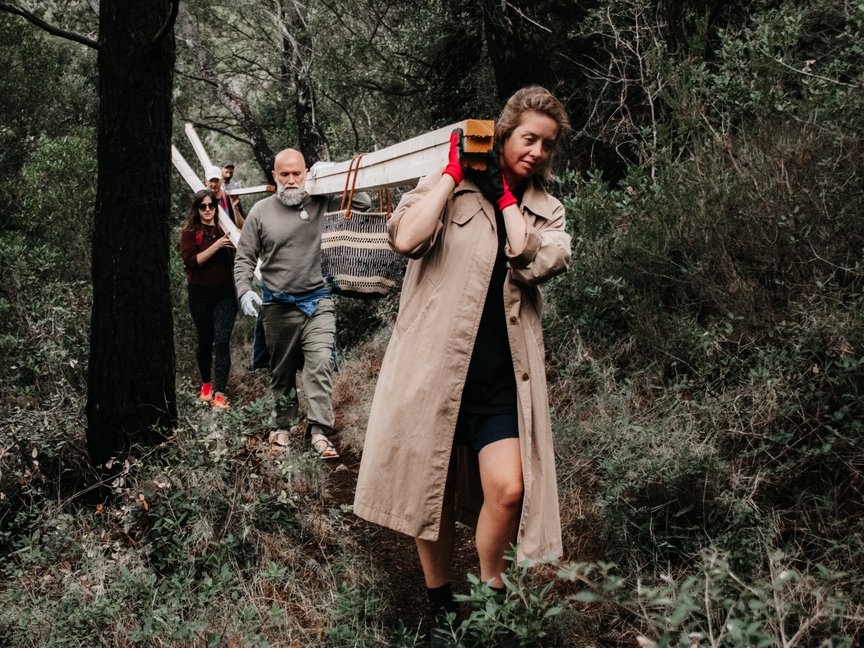
A multitude of social experiences and community-building practices have emerged around the world. These new institutions already form a network that experiments with and implements modes of mutual help, pirate care (care practices that do not align with social conventions of productivity and efficiency) and self-organization, nurturing forms of social autonomy that, instead of separation, promote community connections between people, practices and ecosystems. Useful in times of planetary crisis, they also seek to create conditions for a “good life” in the face of the climate crisis, great social and economic inequality and war as a permanent state of affairs. It is to talk about these practices and ways of living that we join the duo of artists! Mediengruppe Bitnik, to the writer Marko Pogačar and the philosopher Srećko Horvat, one of the founders of ISSA, the Island School of Social Autonomy, a community on the island of Vis, Croatia. In English 26 MAR 2025
0:00Fore speech.
0:06[Music] for
0:27difficult.
0:37foreign.
1:04[Music]
1:15Foreign speech. Foreign speech. Foreign speech.
2:04Hello. I think that I will start to to call you to the stage stage. Welcome. I
2:09will do the presentation now. So, we’ll have with us Sco Warvat. I’ll do the
2:15presentation in Portuguese. Um,
2:28philosophicality
2:43of love. poetry from the future uh after the
2:50apocalypse. Uh he uh watched those Arab
3:07New York Times, The Guardian
3:31Young Russian lyrics. [Music]
3:36The edge of a page. New poetry in Russia. Cryia.
3:45Fore
4:03Median group.
4:13for
4:25to moon digital.
4:52Sco Mark Barco and Carmen welcome and please
4:58thank you for coming
5:04and I will give you the stage now. Thank you very much for coming to be today with us.
5:12Okay. Uh thanks a lot and thanks a lot Liliana for inviting us uh to Lisbon. Uh
5:18this is our first presentation and talk about issa the island school of autonomy
5:23in Lisbon in front of you. Thanks everyone for coming. Uh we’ll just make a short round of introduction and try to
5:30start from a broader context. Uh and then we will dive deeper into the very
5:36specifics and activities of the school. Uh and then of course we are really looking forward uh to your feedback to
5:43your questions and exchanging thoughts uh with all of you here in the audience. Uh so you presented at myko carman and
5:51poga. Uh so what do a philosopher an artist and a poet uh do on a stage in
5:57Lisbon and what do they have in common? Uh besides friendship, what we have in common is uh this crazy utopian project
6:05uh on a very relatively remote island uh uh in the middle of the Adriatic Sea uh
6:12which started some four years ago. But as I said, we’ll talk about the specifics a bit later. Uh what what how
6:18we wanted to start this conversation is uh u putting it in a broader political
6:25and social context. Uh so I think everyone here in the room uh is aware
6:30that we are living in unprecedented times uh that we are living in times of what some outsource would call the poly
6:38crisis uh which consists of of course of uh the climate crisis of war uh which
6:46might at any moment turn into a world war and of technological advances which
6:51are already radically changing our realities and penetrating deeply into all aspects of of our lives. Um we are
6:58convinced and that’s was one of the inspirations of the school that uh all these problems uh in a way go back to
7:06education. uh and when I say education we don’t mean education in a very spec specific uh meaning you know high school
7:14or faculty and so on although that’s also uh uh something we should consider and we consider it as problematic but
7:21much broader uh in the sense that today most of the education uh is happening not in the school or in the faculty but
7:27for the younger generations it’s actually happening happening on Tik Tok Instagram and social networks uh and
7:34that’s the kind of real education youngsters are getting u and we think
7:39that in order to change uh our current predicament which consists of the climate crisis, war uh and technological
7:47advances uh uh we need to uh rethink and reframe our way of thinking itself. Uh
7:55uh one of the inspirations behind this project is uh Ian Ilich uh who was an Austrian philosopher originating from
8:01the island of Bra which is kind of near to the island of east uh who who who
8:06coined the concept of deschooling but also tools of coniviality. uh and uh one of his quotes says that u
8:15the problem it’s from the 70s that the problem of contemporary education I think it’s still correct today uh the
8:21problem of contemporary education is that it became uh uh just a replication of the main values of capitalism um and
8:28that’s what we can see all around also fast forward we founded this and started with this some four years ago uh
8:35nowadays if you look over the Atlantic Sea uh you can see an attack on universities by Donald Trump uh you can
8:42see that he’s cutting funding for the biggest universities uh that actually we are facing an end of universities all
8:49across the world because they are either faced by cutting budgets or by privatization. Uh so I think this is the
8:56kind of framework framework in which we started. We come from different backgrounds uh theoretical, artistical,
9:03poetical. Uh members of the school are engineers, architects, permaculturists,
9:09uh all sorts of doers and thinkers. And what we have in common is that we actually try to build something
9:16materially uh and uh uh by our example to try to build a model uh which can be
9:23either translated in in a specific local context or it can inspire others. in the same way we are inspired by uh by by
9:30some other projects. Uh so uh I think the best way to to move on is maybe for
9:36Carmen and then for for Marco uh to explain what drew them towards Issa.
9:42What uh what do they find? I mean what I said is just my opinion. Uh what what
9:48how did how do you for instance see the reason uh and the reasoning behind uh co-ounding the school and what kind of
9:55problems does it try to address? Yeah thanks. Um I think for me so I’m a
10:03visual artist internet artist uh based in Berlin um in a very urban environment. Usually my work um is in
10:13museums or art galleries and very um also probably dedicated to the
10:21infrastructures of the the urban environment. So you know internet,
10:26electricity, all all that. And I think for me or for us as a collective, the
10:34what the school really um gives is a space for experimentation where we can
10:40think about creating parallel to not say alternative
10:47technologies or at least think about what technologies could be if they were
10:53serving us as communities and not um profiting uh the people who own them.
11:00And what we’ve seen in our practice is that technologies because they’re so
11:06embedded in how we use them and in kind of the the creating process that we have
11:13around technologies, it’s really hard to rethink them on a piece of paper. You
11:18actually need the space for experimentation. And this is to just put
11:24it very you know in very short terms is something that the school can do because
11:29we are a collective of people. So there’s like more than just two. There’s more people to work on stuff and we’re
11:37creating um also the technological infrastructures I would say again from
11:43the ground up in on a very small scale but by this process also rethinking um
11:49what this means to us. Well on our long journey here I was
11:57leaving through this like international editions of newspapers that you can find at the airport. So, I’ve seen an article
12:03featured about a tiny island in the Bay of Naples that I visit often and I love
12:09a lot. Uh, it’s it’s been owned for centuries by like a rich uh aristocratic
12:16family. Uh but what happened like some decades ago like a very severe storm,
12:24one of these storms that are okay if not induced but uh uh for sure fueled and amplified by you know the the outcomes
12:31of anthropot which is basically the um the outcomes of of capitalism piled up.
12:38Uh so one of these severe storms wiped this patch of land that was connected this peninsula with the mainland. So
12:45that ekus and basically it made it an island uh and it ended up of course with
12:52increasing its price tremendously. So what did the Baron or Duke or whoever
12:58the family uh had sent oh voila now it’s an island we can sell it for millions
13:04and the price is only increasing because all this let let’s call them people
13:09because there’s no better term like Elon Musk or or or Jeff Bezos and blah see it
13:14as a ideal residoom now it’s secluded place uh there’s a there’s a remnants of
13:20a local villa of a Roman villa and a huge dilapidated mansion from the like
13:2517th century. So perfect place for one of those to to bite for like uh billions
13:30and billions and uh make kind of you know its own shelter for the uh time of
13:36crisis and if the war starts on the mainland uh and so on and so forth. So for me at least I think for most of us
13:43Issa is something like just the opposite. Uh we went to this um island
13:49that it’s secluded by its position positioned somewhere right in between Croatian and Italian coast between Split
13:55and Monte Carano. Uh we went to the very heart of the island basically in the
14:01middle of the forest. you can only reach it by a let’s say 1 kilometer long goat trail and we are trying by very by by
14:10various tools of conviviiality u conceived in a very broad sense we try
14:16to build I would say like a sort of a platform for very very like various social
14:22activities uh uh communal practice uh as like a grassroot movement from down
14:29under from below and I I mean what brought us together? You said like we we come from very different walks of lives.
14:36So I’ll come back to the to the term that I know stretchko likes very much and Aristotleian term of of poetsis of
14:42of bringing to being creating making but as we know poetis always comes with
14:49seiosis with production organizes structuring of meaning. So those two
14:54always come together but I think Issa brings them together with practice with both theory philosophy
15:01and the very doing of practice making practice happen. Um so uh for me myself but I
15:11think you know we we come issa is an umbrella uh it’s a platform it might
15:17differ in a tiny uh bits and and and and and and facts between even with us here
15:23we are large group but for me the the the main tools and main kind of uh
15:30points of view how what what’s in it for me and is like for on the one And uh it
15:37comes from the local communal uh ways, means and tool of organization, local
15:45practices. When I’m saying local, I’m thinking like at least the Mediterranean basin for us. Uh you know, Gaza is
15:52local, Lebanon is local, Algeria is local, like even uh Spain, Portugal,
15:59Turkey is local. Uh and if I want to represent it through a quote, I’ll go to
16:04like the most famous uh modernist creation poetic who
16:10said already in the 30s, you know, that we should form sort of league between
16:16artists and fishermen uh for self-help sort of a of a gilda of of writing uh
16:23creating and and physical labor people. And the other set of tools and theory
16:29for me it’s a like let’s say dominant discourse and theory of Yugoslav
16:35Communist Party from the 70s on the principle of self-governing
16:41uh theoreticized mostly through Edward Carell and if but what’s important
16:49Yugoslav communist never made it like a super firm written in stone doctrine.
16:56uh it was always even theoretically conceived as a work in progress and if
17:01you want to represent it through a quote okay I’m paraphrasing in the is the last sentence of of manifesto of the
17:06communist party of Yugoslavia that says something like even our own you know
17:12postulat theorems and deeds uh should not become ever sacred to us we we
17:17always need to redefine them rethink them restructure them reuse them I think kind of issa is somewhere on on
17:25collision of these two principles. Yeah. I mean the to connect to what
17:30Marco said uh uh and speak about speak a bit more about the island itself and also its history. Uh I think uh yeah
17:38it’s directly inscribed into the partisan history of
17:43Yugoslavia. Uh so this island was uh as most of the places of Yugoslavia
17:49occupied by fascists first. uh uh but it was never occupied by the Nazis unlike
17:55all the other islands and split and all at the other places. It was never occupied by the Nazis. Once it was
18:00liberated from the fascist by the local population uh and the partisans, it
18:06became a headquarters for Tito. I guess you still know the name uh uh or you can
18:12Google it. Uh if you don’t know it, who was the leader of Yugoslavia at that time? He was the leader of the resistance movement. And basically the
18:19Nazis attempted an assassination in May 44 somewhere in the mountains. It was a
18:24guerilla fight in Bosnia. By the way, Chaguara when he met Tito in 1959 said
18:30that if we knew about your experience of the anti-fascist struggle, we think that we would do our revolution much sooner
18:37in Cuba. Uh because it basically was a guerrilla warfare in the mountains, on the rivers, on the islands and so on. So
18:44after the Nazis tried to assassinate Tito, uh the leadership of the anti-fascist uh uh uh movement,
18:51liberation movement moved to this island. Uh and Tito and them were operating the resistance movement from a
18:58cave. Uh and our school is basically based 10 minutes walk through the forest from that cave. Uh incidentally or not.
19:06Uh but anyhow, this is the kind of historical context in which we are in. Uh uh uh but I also would love to
19:12connect to what you said mentioning this island near Naples and Elon Musk and Jeff Bezos and so on. Uh because this is
19:18obviously and what happened to the island. The title of this event tonight is Future Islands. Uh I hope there are
19:24some fans of the band Future Islands as well here. A great indie band. Uh but uh it kind of wants to imply that all the
19:35places in the world will become some sort of future islands. uh either metaphorically or literally uh u u the
19:44the sea levels uh uh so some 15 20,000 years ago uh during the last glacial
19:50maximum uh this island was not an island uh uh actually Croatia which now has
19:56more than 1,000 islands had only three islands of course it wasn’t Croatia
20:02there was no Croatia 15 20 15 2000 years ago but anyhow this region geographically geologically had only
20:09three islands everything was the mainland. Uh then in the last 15 to 20,000 years uh the sea levels have
20:16risen 420 m uh at from the moment when
20:21the ancient pol which was the first Greek polace in this part of the Adriatic called ISA we took the and
20:27created an acronym out of it. uh from that time. So in the last two and a half thousand years uh the sea levels have
20:33risen for two meters. Uh the projections uh uh until the end of this century is
20:38at least 1 meter but constantly if you follow the news this is changing because
20:44if the Gulf Stream collapses which is a highly likely possibility if perafrost
20:49or whatever you know it might be a few meters. Uh so in that sense the places which are not islands yet at this moment
20:56might become islands. uh and it also reminds me of Jill Deles the French philosopher who in one text on which is
21:02called deserted desert islands uh said that islands are nothing uh but top of
21:09mountains which are not uh cover which which will be covered by the sea and the
21:14other way around. Uh uh so I think this kind of deconstruction of what an island
21:19is is also very important to us especially in relation to the mainland. uh because also very often islands also
21:26like villages and small communities are perceived as something which is backwards which is fragile where there
21:33is no innovation uh nothing and so on. But what we are trying to also uh u
21:39inscribing our project in this long history from the ancient Isa to the partisan resistance and so on. What we
21:45want to show is that islands are basically places where uh uh very avanguard things happen and there the
21:53sea is not something which is dividing but the sea for centuries as you know very well here in Portugal was also
22:00connecting uh cultures through the transmission of knowledge through the transmission of culture uh through
22:07lingua frana which also still exists a few people still speak it on our island and so on. So what we want to do is also
22:13to kind of deconstruct this do thetomy you know why would progressive avanguard
22:18art or theory or practis happen just in Berlin or in London or somewhere uh
22:25actually through centuries and thousands of years it was happening this kind of innovation we don’t really like the term
22:30innovation but anyhow uh this kind of experiments social experiments political experiments were happening on places
22:37which from today’s perspective look as marginal or presented as marginal
22:42or as something which which is kind of outside. Yeah, maybe just to just to top up a stretch
22:49because like historical story because it actually relates a lot with today. Uh
22:55how the police the classical Greek police was was funded is like it was a group of colonists from Srausa uh lot of
23:03them former slaves probably and so on. uh that basically uh arrived to the
23:09territory of the ancient tribes uh ancient eric tribes, liberants and so on
23:15and and built a police. You’ve seen this cemetery uh couple of minutes ago. That’s the place in the island where
23:21their amphitheater of the Greek police uh stood once stood like and now there’s a church and cemetery on top of it. But
23:29with with Greeks, with the colonist uh with the colonists, they brought also
23:35uh different cultures that we are still uh leaning upon today and we see them as
23:44out of tone. But I mean they brought olives, they bought they brought uh uh
23:50wine, grape, um uh they brought cats probably. Yeah. I mean so uh all these
23:56things that we um that that these that these people were sur surviving upon for
24:01for centuries and some of them are are still surviving on that on on on olive
24:06oil on wine and so on even today I mean they were brought to this uh you know
24:12probably initially only two or three ships of colonists. So in a way I mean
24:17of course symbolically and metaphorically we are also trying to relate to this to to kind of build an
24:23infrastructure to uh through through some tools to build another tools a bit
24:30larger tools that can also be of use to the community. I mean uh maybe Carmen
24:37could introduce us to some of the particular projects and yeah sure I mean just to as as a
24:44relation I think this historical view is really useful when talking about
24:49thinking about today’s networks and technologies because um we tend to forget that we have many
24:59of the technologies we use have predecessors you know this connection through the sea um this exchange of
25:05knowledge. Um we we are kind of being in a way being colonized by technologies
25:12from Silicon Valley who are or which are kind of um trying to exchange these
25:18networks of exchange we already have by um you know convincing us that Facebook
25:25is the better way to exchange knowledge or Tik Tok is the only way to kind of
25:31connect with people. And even though these connections kind of um enable a
25:38globality, I think they do have difficulties. And it’s really good to look back and kind of remember um what
25:46we got out of the older networks and try to reclaim this also for the newer networks. So um the house is off-rid as
25:56you would say. So there’s um I mean it’s a very old uh stone house that was
26:02probably used as a a support structure for um the growing of olives or u wine
26:12um at this height. So the whole land is terrace still. Um and uh there’s no so
26:21there’s no connection to running water to sewage systems to um electricity
26:27and this of course with today’s technologies is easy I mean it’s easy to gain the
26:34knowledge to uh connect this all up and this is something we’ve been working on
26:39in the past. So, uh, what we already have is some solar panels we’re
26:45experimenting with where we’re trying to hook up the house, the water tanks. Yes. This is, um, uh, the old, uh,
26:54they’re just trying out the old, uh, um, collection of rainwater into the
27:00Sisterna, the like the an underground water tank. Uh,
27:08same. Great. um which uh we’ve now over
27:13the years also reconstructed and re- um uh made sure the water doesn’t leave re
27:21uh tightened all around and um I think with many of these systems we’re
27:27thinking about always thinking about integrating what is already there and
27:32trying to um amend it with the needs we have today. So uh what we’re building or
27:39what we’ve been working on this year is a circular water system um where we’ve
27:44tried to integrate the rain collecting system but then also thinking about how to purify water how to uh use water in a
27:53kitchen or in a um a toilet system and then reurify it and recycle it in in a
28:01circular system. Um maybe also uh a couple of words about
28:08the pirate radio, about the memory of the world, the library. Yes. So is very good at uh filling the
28:16actual structure of the house with actual books. Um so there’s a there’s a huge library
28:23um in place like you can visit uh of physical books um that Sichku and others
28:29have collected over the years. And uh we’re working with a project called Memories of the World which tries to
28:36digitize these books and keep them or provide a it’s the technical term is a
28:43shadow library. So these are libraries that are um that don’t um pay attention
28:51to um whether the material is pirated or you know in this kind of legal thinking
28:57of copyright. Um they digitize books and try to provide them uh for the future
29:04for access uh online and um we have a
29:09local copy of memory of the world running through the solar panel at the
29:14house which you can access on any device. Um it’s also on the net but we
29:20host kind of a a local copy and um we’ve also started experimenting with pirate
29:27radio um both very low frequency very
29:32localized and also larger with larger antennas. Um V is an ideal place. Uh it
29:40doesn’t have a local radio station anymore. It receives radio signals from
29:46the mainland both from I mean it’s kind of divided uh on half the island you get the Italian broadcasts on the other half
29:52you get the creation bro broadcasts it’s quite interesting in that way so it’s very easy to put up your own radio
30:00locally and kind of you know provide the island with a local broadcast
30:05hijack the feed yes and it’s um it’s um I think our
30:11interest in kind of connecting also with something like radio which is a
30:17technology that’s been around for nearly a hundred
30:22yeah bit more than 100red years now um is also that we see it as um you know by
30:30then networking this back into the internet for example you then get really
30:36interesting um ways of disseminating content again
30:41maybe some other activities but also then to lead it back to a more theoretical level and then slowly open
30:47the floor for your interventions if you have them. We hope you have uh is some
30:53other activities we have been doing uh like educational ones. We have we do lectures, workshops, workshops for kids
31:01uh from six years older and so on in acting, workshops on acting, workshops on philosophy and so on. Uh but also we
31:08do workshops on freed printing. uh Luke and Marina from our group they are doing
31:14this uh which uh they you know using again technology as a convivial tool how
31:20can you use something like 3D printing to actually help the local community. So for instance the local community was
31:26traditionally for hundreds and thousands of years a fishing community. Um even on the island there was a factory called
31:33Yugoplasta huge during socialism producing fishing boats and so on. Uh
31:38but nowadays if something gets broken you cannot really you cannot even go on eBay or wherever to find a missing part
31:44for the boat. Uh so some locals already approached us for instance with the missing parts which our friends part of
31:51is produce little parts from from 3D printer. Um, another thing which we had
31:57also was workshops in Espiranto for instance, uh, with the conviction that language and communicating is very
32:03important if you want to change the world or preserve a sense of community or build a community. Uh, exhibitions,
32:10music, we had an event uh, a solidarity event with Palestine. Poetry is very important. Uh and all of this together
32:17radio as uh Carmen mentioned water collection where we combine traditional tools and modern tools dry stone walling
32:24the tradition of Mediterranean actually it all goes come it all comes back uh to
32:29something which we call social autonomy it’s in the name of the school uh and of
32:34course maybe some of you familiar with Italian philosophy and the post-operist movement operist movement sorry know
32:41about autonomy you know that was Franco Bardo in the s and so on. But we’re not
32:48talking about autonomy but about social autonomy. Uh because as the quote here said by Elizabeth CL, our intention is
32:54not an escape because we know there is no escape. There is no escape from climate crisis. There is no escape from
33:00war and there is also no escape from technology, from the drones, from the geoloccation, tracking and all this kind
33:06of Uh uh so we’re not escaping. What we are trying to do is to kind of
33:11reconquer uh uh uh spaces and rebuild and reinvent uh spaces of autonomy which
33:18is social autonomy. Why social autonomy? Because autonomy or what in Greek would be called outarchia
33:25self-sufficiency is not uh sufficient. Uh so we’re not trying to build some sort of self-sufficiency but we’re
33:31trying to rebuild convivial tools for rebuilding autonomy on the individual and collective level. uh which then uh
33:39has to be and we’re trying to do it and this is I hope one example of it. It has to be socialized. It has to be connected
33:45to other to others to other communities which are not just on the island of V. So this is yeah a very concrete location
33:53maybe on a remote island and so on. Uh uh but we’re not claiming we are special on it’s just happening in V. We met many
34:00people um and we’re in touch with Palestinians, with courts, with zapatistas uh uh and other people who
34:07inspire us as well in other places. Uh and I think uh mentioning what Poga said, Ellen Musk, you know, the newest
34:14trend of the of the Silicon Valley uh oligarchs is uh if you have seen it
34:20recently on the one hand in the United States is called freedom cities. uh so startup nations they want to build
34:26autonomous zones business zones in territories of the United States which would have their own rules tax exemption
34:34own police you’ve seen it with the fires in LA uh the rich people had private
34:39fire brigades for instance uh and then you have also someone who is the darkest among them Peter Thiel uh who is
34:45building something at least announcing something in the Mediterranean to build a city called Prais uh uh and already
34:52was funding something I think Honduras if I’m not mistaken prosper so they have
34:58a dream of autonomous cities societies and so on which are the complete
35:05opposite of what we are trying to do and what we are trying to do is actually uh not we are not preppers we you know
35:11preparing for the apocalypse we think we we we know it already happened the collapse is already here it’s just not
35:17as to paraphrase William Gibson it’s not evenly distributed although we are on the front line especially the
35:23Mediterranean which is like heating twice as much as the rest of the world. We are on the front lines of climate
35:29crisis and in that sense it’s a perfect space for experimentation not for resilience which I hate personally as a
35:36term is this neoliberal term. Yeah, everything is going to and let’s just try to adapt and adapt like Venice
35:42is the best example with that uh thing which is preventing the floods. uh it
35:48was you know when they built it it was projected for the next 20 years but now in the meantime everything accelerated
35:53so much so it’s not resilience it’s like already in the now and here trying to build tools which can be useful even in
36:01emergency situations such as pirate radio but can also be useful for many other things and for what we think is
36:08building good life in times of extinction something like that and just to go back shortly to the practice
36:16to to to to kind to learning, connecting, growing through
36:23through the leads, through doing um I think it’s very important for the school. And I I just wanted to point out
36:29this this moto that you could probably see, uh behind us at the screen. Um uh
36:35we are building the school, the school is building us. I mean, it’s a paraphrase from the old socialist
36:42slogan. uh we are building the railroad and the railroad is building us. It was
36:47one of the biggest slogans of this huge uh working actions uh back in the 50s60s
36:53and 70s and uh it did turn out that uh a
36:58lot of us who are basically as as Carvin said in the beginning we are based in big cities. We travel a lot. We sit and
37:05read a lot, write a lot. um that basically we also lacked physical work
37:13and uh it did uh turn out that it’s really liberating and I mean some of the
37:19working actions that that basically we depend on because um uh the very lot is
37:25extremely secluded and so you’ve seen it everything needs to go there. We tried
37:31we we tried donkeys but it it turned out that we you know we couldn’t get donkeys
37:36and the donkeys tend to be very stubborn so we had to beat the donkeys. So everything needs to go I mean all this
37:42gravel everything you need to shovel it in your bag put it on your back and you know walk one mile on a very steep road.
37:49So uh it basically we did it also in small groups but it works the best if
37:54you have like 100 people like uh 150 people. So you you make chains. Uh so I
38:01mean this processuality of of this very thing that we also when we when we
38:07started we didn’t really know I mean this self organization really kind of uh
38:13happened as a process. um we didn’t really know how it’s going to look like
38:19but then it turns out that when you bring more than 100 people there somehow
38:25within 15 minutes they form groups and they just redistribute different type of work among themselves I mean according
38:33to their skills and abilities and according to what they want to do um and
38:38basically just to observe this process and to analyze it afterwards uh it’s uh
38:45at least for me personally very important uh for understanding some things and uh
38:52uh basically it can be used uh as a foundation for a kind of uh way
39:01broader uh educational practices that we uh want to uh kind of insist on in the
39:08future. Yeah. And I think I mean what you what you say with this self I mean with the
39:13limits that you have because everything you want to use um at Issa needs to be
39:21brought there on somebody’s back and is like a lot of trouble. Um I think this
39:27is really interesting because it kind of means that we will not build I don’t
39:32know 100 solar panels because we don’t need 100 solar panels. you know, we kind of figure out how much electricity we
39:39need and that’s exactly the amount we’re willing to carry up. And I think this is
39:45really interesting. And I think for me one of the most um like personally one
39:51of the most um like wow moments of of the project was um that we have been
39:58carrying up materials to you know we we had to rebuild the roof. So we we were
40:04carrying up um wood and stones and whatever else. But then um somebody
40:10joined the the group who is a professional stonewaller and he carries
40:17up nothing. He builds he terraforms everything from the materials he finds
40:25there. He needs a shovel and a pickle and he goes and gathers stones in the
40:31right dimensions and he knows how to put them together. You know, it’s a very complicated technique. Um, but he needs
40:38nothing. And this for me was like very powerful in the sense that I feel um
40:46without these limits, we tend to just bring in more materials, throw more
40:51materials at problems. And this doesn’t seem to be a very good way of solving
40:57problems. And this was to me personally very inspiring. I mean we still carry up
41:02a lots of stuff but you know this but I think that take is taking us
41:07exactly to to to the next maybe next step of the or or next big project that is basically kind of connecting all
41:14these dots like the old issa the ancient issa the polish issa contemporary issa
41:21uh and it’s kind of uh throughout the this in between history of Ireland and
41:27this like idea that as much as possible is done from the resources that are
41:33found on spot. This is the uh the next thing we want to build and we’re going we’re about to start soon is basically
41:42this this this little valley was terraased like probably already in the
41:4718th century and until the 70s it was covered in
41:52vineyards and they were growing like rosemary lavender and so on. Now it’s overgrown in Makia and in the tickets
42:00and so on. But we plan to clean it and to build in into this slope into the
42:06existing terrace uh terraces basically using the dry stone wall technique and the material uh that we can find on spot
42:14uh sort of a sort of an ancient Greece Greek theater
42:21uh that would be like an open air venue for like let’s say 500 people. the big
42:27one and then the smaller auditorium. So uh and that would basically um enable us
42:33to uh organize um like let’s say big scale events on the spot but that um I
42:42mean that would still imply like um um they would be let’s say um
42:51relieved of this jurist of of the conference tourism um um part and so on
42:57and so forth. Cro can probably fill me up. Yeah. Yeah, we are building a pool, a
43:04garage and such stuff. Uh no, I mean I I think we talked enough. Uh uh we can
43:11talk further but uh if at this point you have any question or a comment, please
43:16raise your hand and let’s broaden the conversation. Uh I can see one question
43:21there already and the mic is here. It will come by our dear friend from the left. So, I
43:27think we maybe raise the hand again and then I see your hand in the second row. Yeah. Yeah. Yeah. You’re the next one.
43:34You We wait for Yeah. Uhhuh.
43:41Now we have two mics. Yes. Hello. Yeah, it’s We don’t hear you yet. Is this working?
43:47Not yet. Maybe he can help you to switch it on. If not, there’s another
43:52mic. Okay, good. Not yet. Maybe can. Okay, now it’s working.
43:58It’s pretty loud. Okay, good. Uh, I would I’m sure you know about the global echo village
44:03network. I wonder if you already thought about collaborating with the global echo
44:08village network because you your idea for for this school seems to be totally aligned with what the w with what Jan is
44:16doing. And by the way, uh, this summer from the 12th to the 17th of August, Jan is celebrating its 30th anniversary and
44:24there will be a big event in in in Hungary near near Lake Balaton. And
44:30perhaps it would be interesting if you if you submitted a proposal for a workshop about your project at the Gen
44:36Gathering. The deadline is March 31st, so you’re very well on time.
44:44It would be great if you I’m sorry that’s tomorrow not no that’s in about five 5 days time.
44:50Yeah, that’s much more. So, um yeah, just yeah, it would it would it would be really really
44:55interesting because um because okay, you will do permaculture, you’re all about autonomy, you’re all about postcarbon uh
45:04transition and it will be a great place to find like-minded people and allies.
45:10Thanks very much. You’re welcome. Yeah, we’re aware of them, but I think the deadline is too soon. We are like
45:17constantly I mean that’s our problem. I mean we are trying to build capacities. We’re constantly now recently invited to
45:23various places and actually every anytime we are here we are not there. That’s also a problem. I mean there are
45:29other people there as we speak which is our luck but we also tend to kind of
45:34minimize. Uh but anyhow we we’ll consider it. So thanks a lot. We’ve seen many similarities with that.
45:40Yeah I saw a question by you in the in the second row. Maybe you can raise your hand again so he can see you. Oh,
45:51hola. And I wonder where is the community? I would like to see the
45:56community or to feel the community that you talk about. And also I was really
46:02sensing what you are saying that when you are not there, you are not there because there’s a heart pumping of the
46:08people that dreamt this to happen that needs to be in the field. You can feel
46:14it. And so for instance, if it is like so hard to come up with this with the
46:21stones and the wood, how can the children come up? Well, the children is not very difficult. The old people
46:27Yeah, children not a problem. I not a problem. I have a daughter who is now 3 years
46:33old. And since she was a few months old, I would carry her first here, which I
46:38love the most. And now she carries and then I was carrying No, no, she’s just 3 years old. Then it was here and then now she’s walking up. Uh the
46:45problem is a bit with older people or uh people uh who are disabled. That’s something we’re aware of but we didn’t
46:51solve it yet. So we will solve that as well at some point. But was this dream shared with them as
46:57you were starting it? Sorry. As you were as you were starting this
47:02this uh you know like bringing the rocks and the stones and dreaming the
47:08the school. Did you did you have like uh meetings
47:14with the local people? Yeah. I mean not like official meetings but many people you can. So this is a
47:20video which is many people are local the ones that you can I respond. Yeah. Uh
47:25if you want I mean you asked me so I can uh but I don’t have to. Uh no you can keep the
47:31mic whatever but I just want to respond. Uh so this video is old. I think it’s 2 years old or something. But half of the
47:38people you can see in the video are local people. Uh uh the the guy Carmen mentioned who is the dry stone waller.
47:45He lives on the island. He’s local. We’re even paying him a salary. So we’re also trying to employ people. Uh uh we
47:51talked to many locals. They they’re helping with their vernacular knowledge and so on. Uh you don’t see the
47:58community here. I mean the the so the island has a population of 3 three and a
48:04half thousand that’s not big uh uh when we do events in comb which are the so we
48:10don’t do events just uphill that’s also part of the answer to your question which I think is about inclusivity how
48:15can you reach no no no it’s about it’s about the conviviality
48:21and uh it’s not so much about inclusivity like for instance the the like how do you eat and all these things
48:27like do you flirting with also I don’t know if they are fishermen. I’m just sensing I’m not criticizing.
48:35Yeah. So last event we had in October we had almost 200 people uphill which is
48:41huge without any toilet yet for instance. So we just building a compost toilet. Yeah. Everyone was in
48:47the woods which is also a very poga can tell you more about it poetically. It’s it’s it’s an interesting experience also
48:53to leave your boundaries and go there. Anyhow we’re building on toilets and so on. So we had 150 200 people uphill. A
49:00big problem is how do you feed the people the volunteers and so on. Uh so we invited for it. So we had lo one
49:06local guy friend who was doing kind of traditional Mediterranean cuisine cooking uphill uh with gas. Uh we had
49:13another friend Kevin Keny from Reeka who founded something which I think you might find interesting if you know about
49:19the non-aligned movement. Uh the non-aligned movement was the biggest internationalist non-aligned movement
49:24founded by Tito Neu and Naser which was the global south movement including Yugoslavia. Uh many African countries,
49:32Asian countries and so on. And this friend of ours founded something which is called the nan nonaligned movement.
49:38Naan is the indish Indian bread. And the concept is that each time you choose two countries now it’s more than 100 members
49:45of the non-aligned movement. two countries for instance Sagal and Indonesia and you make a fusion out of
49:51it. So he was cooking for 200 people there. Uh and it’s quite a logistical
49:57undertaking. Uh uh so that’s about cooking but also uh to come back to you conviviality and community the relation
50:03with the community. Uh u not all programs happen uphill. Our idea is that
50:09most of them will now start happening uphill once we have the infrastructure. a small amphitheater, a big
50:14amphitheater, facilities like a toilet, an outdoor kitchen, all this shower, we’re just building a shower, all this
50:21kind of stuff. Uh, but we’re also having a lot of events around the island which are then where we have local poets,
50:27fishermen who are part of the program and so on and the local population comes, we have 100 200 people at events.
50:33So, it’s kind of integrated in the island. The thing is that that in especially I mean in the Mediterranean I mean I think in
50:41in more or less any island but especially in the Mediterranean island you can’t do anything there if you’re
50:47not part of local community I mean and if you are not like closely interweaved
50:53with inside the local community because I mean you’re going to get to put it
50:58very simply you’re going to get sabotaged you’re going to get expelled I mean you’re going to be seen as a
51:03foreign body that kind imposes and that you know the the mainlanders came to
51:08tell us what to do and to do whatever they’re doing. We don’t want to know. So basically I mean and this is a serious
51:15problem because uh uh it um basically orders you to find methods and to
51:21approach properly. I mean not to kind of uh I mean it is a serious problem
51:28because you know you always see some you know like ah these kind of intellectuals
51:33that come from big cities and they don’t know like physical labor and now they
51:38are showing us what to do and blah blah blah and I mean it’s you you need to find your way around it. I think the the
51:45best way is to be very honest with the people to keep them posted to approach them even if they kind of uh what you
51:53get back is not nice in the first place you start building there. So I mean
51:58there’s nothing without local community there. I mean so that’s why we we try to
52:03lay down as many like workshops for the kids as possible and so on and so forth. You need to collaborate with local
52:11library. uh you need to collaborate with like I mean also with the local authorities in a way. So I mean it’s
52:17it’s it’s closely intervened and it’s getting more and more integrated because there’s
52:24there’s no uh like as as Reko said this
52:29uh kind of autonomy is by no means out here. Yeah. And I think I mean talking about
52:35the local community I think one way we’ve tried to react to this or you know
52:43kind of um integrate in a way is um this island is very
52:49touristic. So in the summer months it’s nearly impossible to or it’s not very
52:56interesting to run a program because we would be running it for um a tourist
53:02community mostly. I mean, I I don’t know the exact numbers, but the island is like 10 20,000.
53:08Exactly. It’s like um u a multiple of of
53:13the people who actually live there. And also the people who live there, they’re mostly in some way invested in the
53:20tourist um um work. So, they’re also really busy. So I think what the school
53:27has done is brought people um content but also um thinking
53:34to the island in the times where there is nothing you know where where this
53:40kind of this that the island has these very strong seasons and we’ve tried to
53:46use this and engage people in the in their off season. May maybe interesting
53:51thing to say that uh one reason why the island is so overflooded with tourists
53:57um uh during the summer is that uh from 1945
54:03all the way to to like basically 1995 uh the island was closed for foreigners.
54:09It was naval base of Yugoslav Navy like you know the outer post towards Italy
54:14and so on. Uh so basically there was no tourism at the island. There were small
54:20two two small hotels mostly focused to the families of the soldiers who were serving there and like I mean of course
54:26you you could come as a local from split but not as a foreigner. So basically the
54:31island was left untouched. Uh that of course in this during this
54:37touristification and commodification of of uh every single um thing in the world
54:43uh led it uh towards this that it’s being observed as you know the Mediterranean as it once was or
54:50whatever. Uh and that made it super packed during the summer. Uh but during
54:55this time between 1945 and and the early uh 1990s um uh the island was really
55:02like alive. I mean it had it was producing uh it had schools uh it
55:09had basically you know very developed agriculture uh fishing industry uh for
55:15for Portuguese people probably familiar uh canned fish industry and so on. uh
55:21basically all these traditions were wiped away and almost lost during this
55:27the last quarter of century. In the last 25 years it seems that even the islanders themselves uh forgot that they
55:34lived even before tourism. Uh in a way we are trying kind of to
55:39reconnect to the life in the island before this kind of
55:45extremely uh invasive juristic plague.
55:53Oh yeah many maybe we take a few questions two or three and then we respond we distribute amongelves. Yeah
56:00please. Hi. Um, I I got curious because you talked about um uh learning or
56:07speaking spiranto uh the language that uh you know 45 years ago I learned a
56:13song in espiranto that I still know today but it was a time when it was still a project I think I don’t know if
56:20everywhere to for it to become an universal language of yes the whole planet but then I lost trace
56:26of it and then kind of English language became organically the international you know kind of universal language that we
56:34all share here. So I’m very curious to know uh where is it happening if it’s
56:40only you is several different communities who is using and revitalizing
56:46language. Thank you. Mhm. Thanks. Yeah. Let’s take a few more and then we that yeah on that side
56:53you who have the mics you decide self organize.
56:59No. Huh?
57:08They say we need a mic. So, try to use it. But that’s not working or what? No, no, no, it’s working. But can I?
57:15Yeah, sure. Thank you. No, thank you. And thank you uh to to Kulto that we can have the
57:20three of you because uh we learn better what it takes and what who is behind.
57:25And um thank you for your great presentation. I have two questions. One, I would be interested in your decision
57:33making process. So, how does that work and who’s included? Who? Well, and the
57:39second one is um convenencia um
57:44also by learning now that this island uh was somehow protected. So, we are also sharing our environments with other
57:51species. How is this interspecies understanding on the island influencing
57:57your practice, your respects for because I saw what you do and maybe some others
58:04had to leave because you arrived. Uh so I was just wondering how this type of
58:09convenience um plays into your work. Thanks. Thank you. Shall we take one more so we don’t
58:15forget all the questions and then we have Yeah, we you we’ll have time for another question but let’s there is one.
58:22Yes, that’s you. Yeah. Um, I had a question about, we touched upon the topic of the location.
58:28Um, and one of the goals of the school was also to basically change a bit how education is done. Um, and I was
58:35wondering a bit about how does this connect? So, if I imagine more a rural place like that island, I imagine more
58:41an education that maybe is more uh connected to nature and so on. While in cities, I see that connection lacking
58:47more. So just wondering um like what are the reason that brought you to decide to
58:53do it in an island rather than maybe in a city uh if it were mainly practical or
58:59more theoretical let’s say. Mhm. Mhm. Any of you wants to start or you want to start with the espiranto?
59:06Yeah I don’t have to say much about espiranto. I don’t know espiranto. Uh but uh we have people who know it very
59:12well. For instance, uh this Espiranto workshop was led by Udit Mayor, uh who
59:17is a polygot, speaks like more than 10 languages and is part of the Espiranto community and it was really nice because
59:23some members of the Espiranto community from the mainland in Croatia came and some others and so on. Uh and then we
59:29also found out that there was an Aspiranto meeting at the beginning of the 20th century in Kija, which is this
59:35small fisherman’s place. So we recovered also some local history. uh but there
59:40she I think her workshop was on the subversive role of espiranto uh and I think that’s very pertinent today and uh
59:48well we will try to continue it that was just the first just an example of a first workshop we had uh uh uh uh to
59:56come to your questions uh uh uh when we arrived did we kick out someone did you
1:00:02to rephrase your question uh no because uphill there was literally no one for the last 50 years literally no And
1:00:09that’s the part of the island where I think it was focused to to the other species. No, no, I’ll mention that as well.
1:00:14Humans, we didn’t kick out anyone. Uh there was there was no one. Uh and that’s connected to what Marco was
1:00:21saying. The main mindset in Croatia, but also in Portugal and everywhere is tourism, growth, progress, tourism,
1:00:27profit, rent everything you have. Rent your toilet, rent your bedroom, another sleep there. uh uh uh uh and uh uh uh so
1:00:37for that reason and for the last 50 or 60 years that part of the island was
1:00:42completely uh left uh it was producing lots of wind wine for even during the
1:00:48time of the AustroHungarian monarchy and so on. Uh and there when it comes to humans there was literally no one there.
1:00:54Uh and we are the first humans probably rebuilding something in the last 50 years. uh uh when it comes to other
1:01:00species uh well uh we encounter mainly what insects uh uh birds snakes and so
1:01:09on. The problem is it’s also it’s a very interesting question. Marco mentioned donkeys. Uh I you know we did a lot lot
1:01:16of research on the island. Uh uh uh and uh like during the Austrohungarian
1:01:21monarchy 100 years ago I think one one one one figure says that there were more than 1,000 donkeys on the island. Uh now
1:01:29what I hear from my friends on the local level there is not more than 10 on the whole island. And when we tried
1:01:35to get donkeys for that, I think we called a few numbers and so on and some Yeah. Some were stubborn as Marco said,
1:01:42but most of the locals didn’t want to borrow us the donkeys because they’re not used like that anymore. And then of
1:01:47course when they heard what we are doing, they said, “You’re completely crazy. We will not give you our donkeys.” But then thanks to modern
1:01:53technology, we used electric uh wheelbarrows uh which 10 years ago you couldn’t use. There was no technology
1:01:59like that. You know, the traditional wheelbarrow, but this is electric one and it’s really useful. Uh regarding
1:02:05other species, we’re very well aware of it. I mean many of us I’m for instance a vegetarian for more than 20 years. Uh so
1:02:12I I’m very aware aware of other species. Uh for instance this uh uh this February
1:02:19we had a big not a big small 30 people working action uh working on the water
1:02:25circle system and so on. And we had a friend who came from the mainland who has something like 100 beehives uh on
1:02:33the mainland somewhere near Zagreb and he volunteered to construct 10 of them. Uh so he arrived and then we we we map
1:02:40the terrain. We find the perfect spot and now we now I think in August uh our first bee colony is coming. Uh and uh
1:02:47we’re trying to mix it with the local bees uh because the mainland bees are not used to the heavy winds of the
1:02:53island. So they don’t survive very long. So now we all I mean I don’t know anything about bees. I did also didn’t
1:02:59know anything about reconstructing a roof but we are learning. I also don’t know anything still about espiranto but
1:03:06you know we we are learning about it. uh and uh uh for instance there is where I
1:03:12come back and then I shut up because you can also join decision-m process like we had and it’s connected to other species
1:03:19uh uh uh a nice person Alica who is now in Greece she recently came with a
1:03:26proposal that we need to build constructions houses for bats uh and it’s very interesting I mean I also
1:03:32don’t know anything about bats but then I started to read it and obviously the island is a very interesting bed space
1:03:38because it has a lot of caves and it has a lot of endemic species and if you were
1:03:43ever bothered by a mosquito then you know uh you you you you you can start appreciating bats because bats can kill
1:03:50like thousands of mosquitoes or something like so they have various functions which I think it’s again about
1:03:55conviviality how to live convivial means to live together in a way uh so how can
1:04:00we live together also with other species but we are just at the start I don’t want to you that we have a
1:04:06understanding and we will uh build an intergalactic interecies whatever uh uh
1:04:11uh yeah so we’re at the start we’re very well aware of it and experimenting and learning from people who know much more
1:04:17than me caron Marco uh decision making process we are in the middle of it uh uh
1:04:23like at the beginning it started from a group of 15 20 people uh we bought the
1:04:28land which is now for 99 years uh rented to the school so it’s kind of secured
1:04:35that it will be public We have an NGO which operates uh uh the whole operation
1:04:40which is a nonprofit uh uh which also helps us sometimes to fund raise when we are successful and so on. Uh uh and
1:04:47since we had now in October 150 200 people of course the question becomes
1:04:52how can people who come contribute in a meaningful way codicide and so on. So
1:04:58now we opened the process. I mean to be completely clear I founded a few
1:05:04movements DM25 withanis Vufuakis progressive international and so on and this is not a social movement uh so uh
1:05:12this is and it won’t be a social movement sometimes people come and expect this to be a social movement but
1:05:17it’s not uh so if for instance if you’re building a terrace which has to host 100 people you can’t really have direct
1:05:24democracy about it you have to listen to the architect and to the engineer because it will kill people if if everyone if I decide about it But what
1:05:31we are doing now is to open the process and that it looks like that that we found that five or six working groups uh
1:05:38which will be joined by those people who came but it can is also open for others uh one on infrastru material
1:05:43infrastructure the other one on education what kind of programs we are doing the third one on digital
1:05:48infrastructure uh uh uh the fourth one on fundraising and the fifth I don’t know what uh and now it’s kind of we’re
1:05:56broadening to other people but again it’s an experiment uh uh and we’re area. Well, we are aware of it that we want to
1:06:03open it to other people who can join and participate in it. Uh but uh uh with a
1:06:09kind of combination of verticality and horizontality to put it in more abstract terms. Over to you and there was another
1:06:17question I think. H um yeah no in terms of I think this
1:06:25question of the other species who are there is really interesting and we’ve been like really learning a lot from um
1:06:34the local communities about also for example the trees that are there um that
1:06:41because this land was terrorist and used uh for like hundred hundreds yeah
1:06:47centuries um and then suddenly ly stopped being used. You have maka trees
1:06:55that are all the the same age and that is really bad for fires for example. you
1:07:01know, you would actually um if you want um a healthy environment, you would now
1:07:07need to cut certain trees, plant other trees, make you know, this kind of and
1:07:12this is interesting in a way because, you know, as especially me as a as a
1:07:17person from a city, um this is also um the same problem Berlin is facing with
1:07:25wildfires. Berlin has had very hot summers. So, I’m based in Berlin. We’re surrounded by forests and um these
1:07:32forests have the same problem. They’re all the same age. They’re all the same type of tree and they burn like matches.
1:07:40When it starts burning, it’s hard to put out. And this is a problem that uh
1:07:45Berlin is trying to solve by recreating these forests. And we’re kind of doing this on a on a very very small scale by
1:07:53speaking to people who because I think for people who especially who have
1:07:59family or a long family history there it’s clear they look at the land and they’re like this is you know it’s not
1:08:06good but to us it we don’t see that and this is an very interesting process of
1:08:12of learning also that we’re trying to pay attention to. Yeah. And maybe just to add a bit to a
1:08:18bit to this like deliberation process that a lot of us come from various
1:08:24movements or we were involved in various movements that were based on direct
1:08:29democratical principles uh plenums and so on. And of course we do try to
1:08:36implement uh some of those practices and to keep it as open as possible. But as
1:08:44SKO said um I mean again through practice we kind of also became aware of
1:08:51certain boundaries of uh this radical
1:08:56self-d deliberation and we are trying to keep it somehow
1:09:04open but functional. Yeah. It’s a it’s a it’s a it’s a combination of of
1:09:10horizontality and verticality where verticality I think usually represent
1:09:15this axis of uh responsibility like someone because it’s a it’s a it’s a
1:09:21project that can lead to I mean if you do things wrong it can lead to wildfires
1:09:28that can uh ravish the the environment it can lead to significant tectonical
1:09:35ruptures in local community that is not big. Um uh it it can I mean it can
1:09:40really cause a lot of harm. So I mean uh the you really we really need to be uh
1:09:46responsible about it and uh sadly responsibility
1:09:52uh usually requests at least certain form of verticality. Uh so that’s why
1:10:02yeah next round of questions I hope we answered some
1:10:11okay thank you um I have two questions one is uh how you got finance in the
1:10:18beginning how you started how how you got funding and the second is uh
1:10:24uh once the school is the center of your project really what are you schooling uh
1:10:32or which is your market for schooling what what schooling will happen in your
1:10:38development. Thank you. Thanks.
1:10:43Hi. Um when you were talking, you were
1:10:49mentioning that a lot of the activities that you’re doing is um you know, you’re going to this place and you’re having to
1:10:55figure out how to um there’s no surge, no water, no technology. Um you know,
1:11:01you’re building this house, the bees, the purifying of the water, like um I guess there’s this sense of sort of
1:11:08taking things back in time in a way. Um, and I guess I wonder why you’ve taken
1:11:14this approach. Um, and sorry, I was like thinking lots of
1:11:19different things, so I’m trying to bring it together. Um, but yeah, I guess it was striking to me that it seems in some
1:11:26ways like a sort of artistic project. You know, you’ve got this context of sort of planetary collapse and becoming
1:11:31an an example in a way. Um, and so yeah, I’m just curious about how maybe then
1:11:39you see this this project is it um sorry and that’s probably quite a few questions. I’ll just stop.
1:11:45Yeah, maybe one more because we’ll forget all the questions and then don’t don’t worry you will all have we can stay here until
1:11:51tomorrow. So are you here? I mean we are staying until tomorrow. Yeah, we can hear you. Yeah. Okay. I just want to ask you for a more
1:11:59clear picture of what uh you do. I mean,
1:12:04uh, how many people live there up there? Um, how long they stay? Uh, what are the
1:12:11routines? Do you wake up early and you’re 10 or you wake up early, you’re
1:12:16two and people join you? Uh, how how it works because it’s not very clear if
1:12:21you’re just there for a period of workshops or if a lot of you live there.
1:12:27Yeah, maybe I start again and then we make a round. So from this question at the moment no one lives up there and
1:12:34that’s also a question I think many similar projects had a problem I mean Carmen can tell she was active together
1:12:40with Domo from medium group a bit in the squatting movement in Switzerland and as
1:12:46everyone knows in the squatting movement or any project like this as soon as someone lives in the institution itself
1:12:52or it becomes a problem so the house itself is a library and it’s the headquarters uh with the idea we have
1:12:58three hectares of land so That’s something like 30,000 square mters. It’s quite big. Uh and the idea is that we
1:13:04have a kind of decentralized that after this we are attempting to build other structures like a judian kola, Mongolian
1:13:13whatever facilities where people could stay over. Uh so at the moment no one is living there. Uh at any moment
1:13:21someone is there working not every day but every two days or whatever. Uh and
1:13:27it really depends. I mean it’s it’s really like a lot of people already involved. Uh so at some point it can be
1:13:3330 people at some point it can be two. Uh it depends. Uh I wake very I wake up
1:13:39very early at 6 or 7 because of my kid and then I go uphill for instance when I’m there I’m like half a year on the
1:13:46island half a year somewhere else. Uh some people are there all the year some people are less. Uh uh so that’s that’s
1:13:52just this uh uh but it’s connected to the question you made about temporality like one of our slogans and philosophies
1:13:59is called pomalo. Pomalo means take it slow literally but it’s a version of
1:14:04fina lente the Latin saying which says you have to
1:14:09to how do you say it fina lent hurry up slowly uh or the saying which the
1:14:15zapatistas had we walk slow because we walk far and on the island wherever you
1:14:20go instead of saying hi ciao people would probably say pomalo or if someone
1:14:26asks me or I ask I asks you shall we meet tomorrow when should we meet and you would probably if you’re a local one
1:14:33say pomal take it slow so there is really this but that’s not unique for our island I think that’s a kind of
1:14:39Mediterranean philosophy a south sort of southern thought where people have time
1:14:44to sit uh and to sit I mean the older people on the island are sitting like for 10 hours on the river and just
1:14:50looking at the sea every day for the last 50 years and they’re not bored by it I mean it’s a different I think that’s important in in in in alternative
1:14:58to the capitalist 24/7 or seven acceleration where everyone is uh
1:15:03following some sort of yeah I mean money is money is time is money as the saying
1:15:08says coming back to your question about funding and money obviously you need money for this uh uh so at the beginning
1:15:16the first or two years uh many of us invested our own money we didn’t have any kind of funding uh so we collected
1:15:23money uh uh to buy the land and then to to make a contract with the NGO and so
1:15:28on once we founded the NGO we were happy to receive a few private fund private
1:15:34donations one of the first one was by the voice you have heard at the very start that’s Pamela Anderson uh so we
1:15:42received a modest donation uh but generous from Pamela Anderson at the
1:15:48beginning from some other people at one point we also received some crypto donations which really helped us and uh
1:15:56yeah so far we didn’t receive any funding from the state for instance we received some little funding uh for the
1:16:03workshops for the kids uh from the local community from the local authorities and
1:16:08for this water circulation system we received funding from a EU project
1:16:13called starts uh uh which is a broad project supporting this kind of projects
1:16:20uh but yeah I think that’s something we work on mainly we depend on donations at
1:16:25this moment and enthusiasm uh because uh you can’t really pay 150 people who stay
1:16:32on the island for one week and are crazy enough like us to carry stones uphill.
1:16:37There is no money in the world which can pay that. So we are really happy that we have these people who actually
1:16:43enthusiastically uh uh work in the same happy cifia way as us as us. There are other questions
1:16:49but Mark here well I mean there was one about like seeing it as a sort of an artistic
1:16:55project. Yeah. I mean I have to say um also ISSA is a is a platform uh it’s like it’s
1:17:03like a lot of people involved and a lot of people have kind of different angles of looking to this common good and this
1:17:11infrastructure that we’re building and I mean the of course we we stand on very similar political or maybe also
1:17:19theoretical grounds but the angles like tend to uh differ sometimes even
1:17:24significantly me personally I don’t see it as an artistic project. Although we facilitate a lot of kind of we organize
1:17:31a lot of artistic events like uh literary evenings
1:17:36uh exhibitions uh uh like art projects and so on and so forth. uh but I mean I
1:17:45basically see entire issa as a tool and I mean um uh so it’s upon
1:17:55the one who wants to invest time and energy into using this tool to decide
1:18:03you know how exactly to use it and I think our role is uh predominantly and
1:18:09and maybe first of all to kind of to build the tool, you know. So, so I mean you can also
1:18:17kind of uh probably observe it as a sort of of of
1:18:23of ours, but for me it’s more like techn in in this phase.
1:18:31Yeah. Um I think um for me also your question was interesting. Who do we
1:18:37school? Um I think it is the the volunteers who come there um whoever you
1:18:44know whether they’re from the island or from somewhere else. Uh last year this festival we ran had a lot of elements of
1:18:53schooling each other I would say. So uh you know the people who came were both
1:18:59um giving workshops but also participating in workshops and carrying stones. So it’s this kind of um I think
1:19:07this is this is the the the way we see knowledge or the necessity to share
1:19:13knowledge in a different way is also trying to build um a space where
1:19:19knowledge can be shared um that doesn’t work along the lines of this capitalist
1:19:26school thinking or traditional school thinking but this is something we’re also developing in a way um and And I
1:19:34think for me this the the way we’re trying to very experimentally develop um
1:19:44you know all these project parts does have aspects of um of being an art
1:19:51project in a way because it always produces an aesthetic surplus which I would say
1:19:57is kind of the point of what art does in a way also. So, I mean, it’s true it’s a
1:20:05tool, but it does also have the potential in many moments to be more than just a tool or to mean something
1:20:12more to people. And this is also where I think people connect and why we’ve had
1:20:17volunteers who’ve come back multiple times because they find something that speaks to them. And also this platform
1:20:26gives them the freedom to develop um something that speaks to them and others
1:20:31or you know their whatever they perceive as their community or their audience um
1:20:37that kind of goes um beyond what you would find in a in a
1:20:42more classical structure. At least that’s what we hope. But it’s um
1:20:49I I often times feel that we there’s not a lot of I mean this is also good in a
1:20:55way. Um there’s not a lot of um um
1:21:02um examples to aspire to. I mean there’s always parts but in this combination it
1:21:08becomes complicated and we just try to kind of be open about failing also. I
1:21:15mean this realizing that you’re failing or that something isn’t working in in
1:21:21the way you imagined it I think is also very healthy for a project but it’s also
1:21:26hard sometimes you know to kind of fail and realize you’re failing and we try to
1:21:32kind of integrate this I mean we are also schooling ourselves that that’s that’s that’s I mean part of
1:21:37the of the process I mean to kind of reschool yourself through the process
1:21:43and of course whoever Whoever wants to join to this uh process of of
1:21:49deschooling and reschooling is invited to
1:21:55Yeah. Maybe we go for the next round of questions in the second row and then there. Yep.
1:22:01And I don’t know how much Liliana will tell us when we have
1:22:07Thank you. Um about your uh radio projects. I don’t know if uh the
1:22:13projects are how how developed are uh at at this point but I have a few few
1:22:21questions. Do you have uh you use a legal frequency? And if uh the answer
1:22:28are yes, it’s easy in in the island to get that legal frequency because in
1:22:34Portugal is not. Um and what is the paper of the the radio project and uh uh
1:22:42in the school if uh and and uh um if local people participate,
1:22:49what kind of program you have in the in that radio project? uh if there are
1:22:55informative or artists experimental for example uh and I’d like to talk to hear
1:23:03you talk about the project radio project sure thank you
1:23:08how many questions are there all to all together can you please raise your hands one more there
1:23:13one more there one more there so I suggest we take these ones and then we have a last round of responses maybe
1:23:22hello good Afternoon. Um, I would like to ask you if you believe in degrowth.
1:23:29Degrowth. Yes. Yes. Uh, and if you have any ideas to,
1:23:36I don’t know, to change the the system, the educational system that
1:23:44we have now, which is more or less the same all around the world because we
1:23:49need to do that. These project projects are good to start something but then we
1:23:55need to just move around the system and try to
1:24:01I I I wouldn’t like to say educate the new the new generation but to elucidate
1:24:07the new generation and if you have any proposals because that’s a field that I
1:24:14would like to explore. Um and that’s it. Thank you.
1:24:22And I think here in the in the second row in the beginning here in the middle here.
1:24:27Yes. Yeah.
1:24:33Hello. Um I’m still a little bit here um with the word conviviality
1:24:40and trying to understand how far does that notion stretch for you. Um so far I
1:24:48hear a lot about um um the project being at the start so at that stage and um for
1:24:58me that connects a lot. I hear also about the ambition to grow to build auditorium. So progress so I hear also
1:25:06that this is also permeating I imagine your dayto-day. So I’m
1:25:12imagining a conviviality that is involving a lot of work. um a lot of
1:25:18actionoriented, goal oriented um purpose oriented activities
1:25:26and um the question is if um having fun and I understand that planning and
1:25:34working is also can be also a lot of fun but true if something like having fun for fun’s
1:25:39sake or um having no purpose um in in the way that you that you
1:25:47co com co live um and do things together that that’s also something that it’s um
1:25:53included. Yeah, that’s it. Mhm. So I suggest Carmen responds the
1:26:00radio question. Yes. Because she knows much more than us. Yeah. Um so uh I think so we medit
1:26:12for probably 20 years now in different ways but our
1:26:17approach has always been artistic to say that we’ve used radio mostly as a
1:26:24tactical tool never with a license um the licensing I mean this is just on a
1:26:30side note is actually quite interesting because the the frequencies are being liberated.
1:26:37Um many countries uh this year, Switzerland, just a month ago, Switzerland for example, um just cleared
1:26:45the FM band. They’re not using it any anymore. They’re on digital. So suddenly
1:26:51I mean this question of pirate radio which was like you know in the 80s was
1:26:56like people went to jail for like long like long periods of times for
1:27:03making illegal illegally making radio and that’s off the table. Nobody cares.
1:27:09I don’t think anyone is looking at the FM band anymore in Switzerland. And I think that’s quite interesting because
1:27:16it suddenly opens up new spaces. Um I think our interest in radio um came from
1:27:22the fact that we realized early on in our practice that technology
1:27:28um the way it’s uh produced within a capitalist system always tells you that
1:27:34always tries to keep you in the role of a user. It tells you it’s all very complicated. You know you need an
1:27:41degree. Nobody understands the internet. It’s totally impossible. Don’t make your own website. Very complicated. you know
1:27:47this type of approach and we come from a very DIY background and we really want
1:27:53to know about stuff and we realized very early on radio is very very um easy to
1:28:01replicate technology. You can literally 20 minutes you make your own radio um um
1:28:10uh broadcast device which will broadcast you know within this room but it’s it’s
1:28:16the same you know you just make it bigger and it will reach more or you make the antenna bigger and it reaches
1:28:22more but the technology is the same and this is something we’ve been doing throughout the last 20 years. We’ve been
1:28:29soldering small pirate radio devices that work on a very local level and it’s
1:28:35very empowering because you just do it and you you know 20 minutes later you
1:28:41have a functioning radio system. This is of course not the 24/7 broadcast where
1:28:48you you know uh produce programs. That’s not necessarily the idea. But we’ve kind
1:28:54of started with this. We’re actually now we’ve been invited by um the fest in
1:29:02Vienna to run a radio workshop where we will try to take this a bit further and
1:29:07talk about tactical uses of radio in you know when things break down because
1:29:14there have been in the past like very interesting ways of using radio in kind
1:29:19of um counter or protest culture and we’ll be looking at that. So, it’s
1:29:26something we’re exploring. Um, but I guess in on V also, I mean, I’m not sure
1:29:32how the creation laws are exactly, but I don’t think anyone is paying attention to the FM band.
1:29:39Yeah, I don’t think so. Yeah. But so maybe this about the radio. try to
1:29:46shortly answer the question about like how to say not not not completely
1:29:51instrumentalized uh practices of of spending time together. I know uh this
1:29:59beautiful Emma Goldman’s quotation comes to my mind. I don’t want to be a part of of your revolution if I can’t dance. Um
1:30:06uh I think there’s a lot of for us I think it’s it was never a problem of this kind of uh not being able to
1:30:14structure things in like let’s say situationist way or just to to float around to you know to to have the re
1:30:21around the island and to party. I mean we all come from different background backgrounds and we kind of
1:30:28and grounds as well and grounds and grounds at the same time. Yeah. I mean we we tend to work
1:30:34hard in what we do like in our core whatever practices and then it was never
1:30:40a problem for us to to party a lot to just hang to to to to spend time in you
1:30:46know to to socialize through um unnecessary and not goal oriented uh
1:30:52spending of time. uh vice versa. It was actually very hard to to find
1:30:59mental energy, mental time and then physical time and space to after you do all of your work. Uh then to also then
1:31:07to to take time to to you know to picture some goal that that you need to
1:31:12go to that you need to reach and then invest like loads of time and work
1:31:18mental, physical, organizational into reaching it. So I think um it’s more about making yourself work more and work
1:31:26harder and and to keep this goal somewhere here so that it that it keeps you afloat because I mean we are all
1:31:32overworked. We are all you know we are I mean as you know like I mean all of us probably here in this room and out of
1:31:38this room I mean it’s kind of it’s it’s working doing these things on account on
1:31:44the account of your own well-being. So I think partying and like socializing in
1:31:49is is what keeps us kind of sane and and I think without that part uh uh this
1:31:57probably wouldn’t work or it would work in some very weird way. I don’t know
1:32:02what you think about. Yeah, I think I mean to come back to this and to you go Goran Bogdan you have seen him uh on on
1:32:09here he’s one of the best actors recently nomin the the movie which we also have shown on the island the man
1:32:14who couldn’t remain silent about war crime in Yugoslavia was nominated for the Oscar anyhow he had a great answer
1:32:21to your question as if he heard your question where he said that in today’s world where everyone does something with
1:32:28a goal in order to be efficient and to reach something which is a very concrete goal
1:32:33uh uh what he thinks is subversive and I agree with him and uh where you can find meaning is precisely to do the opposite
1:32:40to do something where there is no uh outcome. I mean no there is no profit
1:32:45out of it. The you know for for years we were just carrying stones like literally we brought like 20 tons of material
1:32:53already uphill and from the perspective of even of the locals who are now mainly in tourism that looks completely
1:32:59ridiculous and meaningless. you know why are you doing this there is no purpose
1:33:04out of it and I think you we have to recover this kind of Albert Kami has this beautiful ending of the myth of
1:33:11Cifus where at the end he says we have to imagine Cizuus happy uh and that’s us
1:33:16you know you have to imagine us happy and we are happy with every stone we carry up uh uh and to come back to your
1:33:22question uh deg growth I mean it’s something which is close to our hearts and minds and theories and
1:33:29many people who are involved in this are deg groters. But I personally wouldn’t
1:33:34describe it as a degroth project. I wouldn’t describe it in any kind of adjective to put it like that because
1:33:40it’s a very heterogeneous project. You know, we have anarchists, we have decroters, we have communists, we have
1:33:46artists who don’t give a damn about anything or whatever, you know, politically and so on. So I think that’s
1:33:51the beauty of it that it’s very plural. uh and uh to come to your second question
1:33:59which brings me back to the beginning you know this is not a social movement I I see the urgency to change the existing
1:34:06institutions educational institutions uh but that’s not personally that’s not my
1:34:12role uh I decided to build parallel institutions and I think today we have
1:34:17to build parallel institutions in an age where the institutions we knew about
1:34:22nation state as an institution which is a recent one exists 200 years maybe
1:34:28somewhere is coming back with Orban with Putin and with Netanyahu for instance
1:34:34but generally it’s disappearing in a way I mean big tech is taking over nations Palanteer is taking over the health
1:34:40system in UK there they are free freedom cities now already growing and so on uh
1:34:47so instead of reclaiming the nation state god forbid uh we want to build parallel institutions and also that for
1:34:53education I see the necessity for people who are university professors, school professors, kindergart kindergarten,
1:35:00work in the kindergarten and so to change the institutions from inside. I’m always happy to support them but for me
1:35:06personally that’s not my role at this moment. Maybe it will become I don’t know. Uh uh so issa’s role is also not
1:35:13as I said it’s not a social movement. Our role is not to come into a university and change it and it’s not us
1:35:19to teach the young people what they should do. Although we can facilitate these discussions and share our
1:35:25experience but if you look what the younger people are doing today we should learn from them and I’m specifically
1:35:31talking now about the things which are happening in Serbia uh for the for which which is the unprecedented student
1:35:38movement in Europe since ‘ 68 for more than four or five months more than 95%
1:35:44of four or five months 95% of the universities in Serbia are under
1:35:51occupation and the governance governance of the students but also schools and yeah yeah that’s what they and it’s
1:35:56spreading to schoolsarmacies blockades of cities bridges and so on
1:36:02and I learn from them when I see those people who have 20 25 years old they are
1:36:07smarter than us they are already doing in practice self-governance social autonomy self-management uh uh of course
1:36:15it’s a big question where this protest will go uh uh with with with this but I think everyone here in Portugal in
1:36:21Europe should learn from the Serbian students at this moment. I think this is the most radical movement in the recent
1:36:26years in in Europe. Uh so it’s not us the role of this small school on a remote island to teach them what to do.
1:36:33Although we had some students and people from Serbia at the school although me and Marco were part of the occupations
1:36:40of faculties in Croatia some 15 years ago. So they are interconnections but I
1:36:45think our role is more to bring those people together on a space which is a very special space with a special
1:36:52temporality to be able not only to recover. It’s not a recovery retreat or whatever but to exchange ideas in a more
1:36:59productive constructive ways and then when they go away from the island they can be useful in their communities in
1:37:05universities in occupations uh or whatever you want but I don’t see issa as a project or a social movement which
1:37:11should which is going around and then making a revolution no I mean yeah some revolutionaries come to the island some
1:37:18will become revolutionaries but we’re not a guerilla camp which doesn’t mean we will not become it given the the
1:37:25global situation but and deg growth is up I mean it’s an interesting topic and we are getting this question a lot and we will be
1:37:31getting it more and more I think for me personally um it’s a slippery slope I
1:37:36mean some aspects of it are um of course uh to be taken in serious consideration
1:37:42uh but uh in especially in this like uh uh semi-liberal green discourse of
1:37:51degrowth I mean I from what I’m seeing currently for my perception of the things it’s way
1:37:59way way socially um inconsistent and uh insensitive and I
1:38:06mean the main question as as almost always is the degrowth for whom you know
1:38:12how do we distribute this degrowth you know yes you know the growth of the Silicon Valley and but tell tell these
1:38:19stories you know to to the people in central Africa or to the people in in in in parts of Asia. Uh you know
1:38:29tell you know Congalles people that you know they they should kind of this you
1:38:34know mining is dirty. We need to scale it down. It’s not good for the environment. I mean you know it’s it’s
1:38:42green liberal crap. I mean it’s I mean I know that was not what you had in mind but it’s it’s it’s the perspective we
1:38:48often we often get very socially in uh sensitive uh vision of degrowth
1:38:57no no I’m saying what we are often getting as a as a you know laid out as
1:39:04the you know the face of of
1:39:10yeah but anyhow we’re not against it some of us some people who are involved
1:39:16in ISA are the growers but at the same time we’re also critical of it I could even go further and speak about the
1:39:21German greens for instance but I don’t I will not go there I know it’s not the same question but anyhow
1:39:26no we know it’s not the road but we’re saying what we are often getting offered under that signifier I
1:39:33so uh yeah you can respond or whatever you
1:39:39can disagree with us that’s also nice Final question. One final question. No.
1:39:45Yes. No. Yes. I have to wait for the Yes. And it’s coming always.
1:39:52Okay. Uh so I it’s a simple question. I still don’t understand where your money comes from. So either you have you’re
1:39:59private funded or I don’t know how do you survive? Yeah, we survived by carrying stones. Uh
1:40:07as said at the beginning we invested our own money and then we got private donations. Uh, private donations means
1:40:13like from the Pamela Anderson Foundation, I don’t have any necessity to hide things. We got €10,000.
1:40:19That’s not much for us. That was a lot and it was a game changer at that time. Yeah, we bought some basic tools with
1:40:24that. The first tools were bought. We bought a chainsaw by the Pamel Anderson money for instance. Uh, uh, and
1:40:30electric wheelbarrows, two of them. One cost €500. I can give you all the details. And in the meantime, we got
1:40:37smaller private donations. for instance, we got a crypto donation and now we’re
1:40:42in the process of fundraising. We’re pretty bad at it. None of us is really in that world. Like you could apply for,
1:40:49you know, Creative Europe or this or that and blah. We’re not against it, but we are very slow, very inefficient and
1:40:56we don’t have experience in it. But yeah, so far private donations is the main income. Yeah. But there is no mega
1:41:04big millionaire behind us or something like that. Huh. or system no self self sustaining
1:41:13yeah currently we are surviving on a on a crypto donation by uh let’s say let’s
1:41:19call it a random random crypto dude yes like no one no one like that comes from
1:41:25like the industry or banking yeah so we don’t have big money we don’t have a big millionaire you know recently
1:41:30there is this trend beuen in Venice big billionaires makes a center the now
1:41:36instit initute in Hamburg and then you have all these kind of millionaires or private funders or private art
1:41:42collectors and so on. We don’t have anyone like that and we will also not let them in. So
1:41:48yeah but I mean money is one aspect. The other aspect is um that over the past
1:41:56four years many people have donated their time like thousands of people hundreds of
1:42:03thousands of hours and that’s really I mean even if you’re if you’re a millionaire you wouldn’t have the money
1:42:08to do that because you would not convince those thousands of people to come and carry stones for free for
1:42:14instance so I think that’s the most if you would count it in money which we don’t do that would be a few hundreds of
1:42:20thousands of euros how much you would have to pay all the people to work there. So I think that’s also something that’s very important to
1:42:27say that it’s not all about money and we also get a lot of things which
1:42:33usually someone would have to pay it we don’t pay it for it because it’s a kind of collective project where the outcome
1:42:38is not someone’s private profit or something like that and if money runs out this very moment we’ll just keep on
1:42:46in a very slow pace you know then just you know 20 of us whoever wants to come
1:42:51who can you know you sleep in a tent and you work as much as you can. It’s just going to it’s going to make it way way
1:42:57way way slower. But I mean, it started without money, you know. It will it will go on until we have some energy to and
1:43:04not necessarily we someone has energy to push it. Money helps, but it’s not.
1:43:10So, if you can donate something, please. Yeah. Of course. No, I think what what the the money also did this this initial
1:43:18funding uh what it did provide is the space to build certain um you know uh
1:43:26spaces for exchange especially in time. So we were able to run a festival where
1:43:32we could also um for part of the speakers at least we could uh
1:43:38cover fees cover feeds invite them um bring them to the island and I think this um has now
1:43:46enabled us even though I mean is right we’re pretty bad at it but theoretically
1:43:52I think it’s enabled us to start certain kind of projects that could in
1:43:59themselves receive funding. The only one we’ve been m able to do this for is the circular water system which the A EU has
1:44:07funded as a project. So this kind of um this is really good in a way because it
1:44:14funds specific aspects or we can kind of as a group decide what we need what we
1:44:21want to um invest effort in and then try and fund it through you know um whatever
1:44:28public funds or EU funds and but this was a coincidence in in the sense that
1:44:34the EU um had this interest in funding water projects and they actually approached us and asked us to you know
1:44:42come up with a water project. We were like oh yeah we actually have the need. So this I mean this doesn’t always
1:44:49happen but I don’t think if we we needed to be at a certain point to even have
1:44:55the capacity to you know write this application to go forward with this um
1:45:00this needs a certain level of organizing and to be honest we at the moment we
1:45:06don’t have the level of bureaucracy needed to run EU projects we just I I
1:45:13wouldn’t know who could handle the that from our side.
1:45:18Yeah, we’re pretty bored by that. Yeah, I would prefer to carry thousands of stones every day than to write for EU
1:45:25project for instance. But anyhow, should we wrap it up slowly? Yeah, we wrap it up. We thank you a lot
1:45:31for the great questions. This is our first event in Portugal. We received a lot of good, useful feedback and yeah,
1:45:39if you wish to come, you can find us uphill. That’s it. Thanks.
1:45:45Thank you. Thank you. Thank you so much for the questions and comments and and everything.